
Podcast: Play in new window | Download
Episode Summary (for Show Notes)
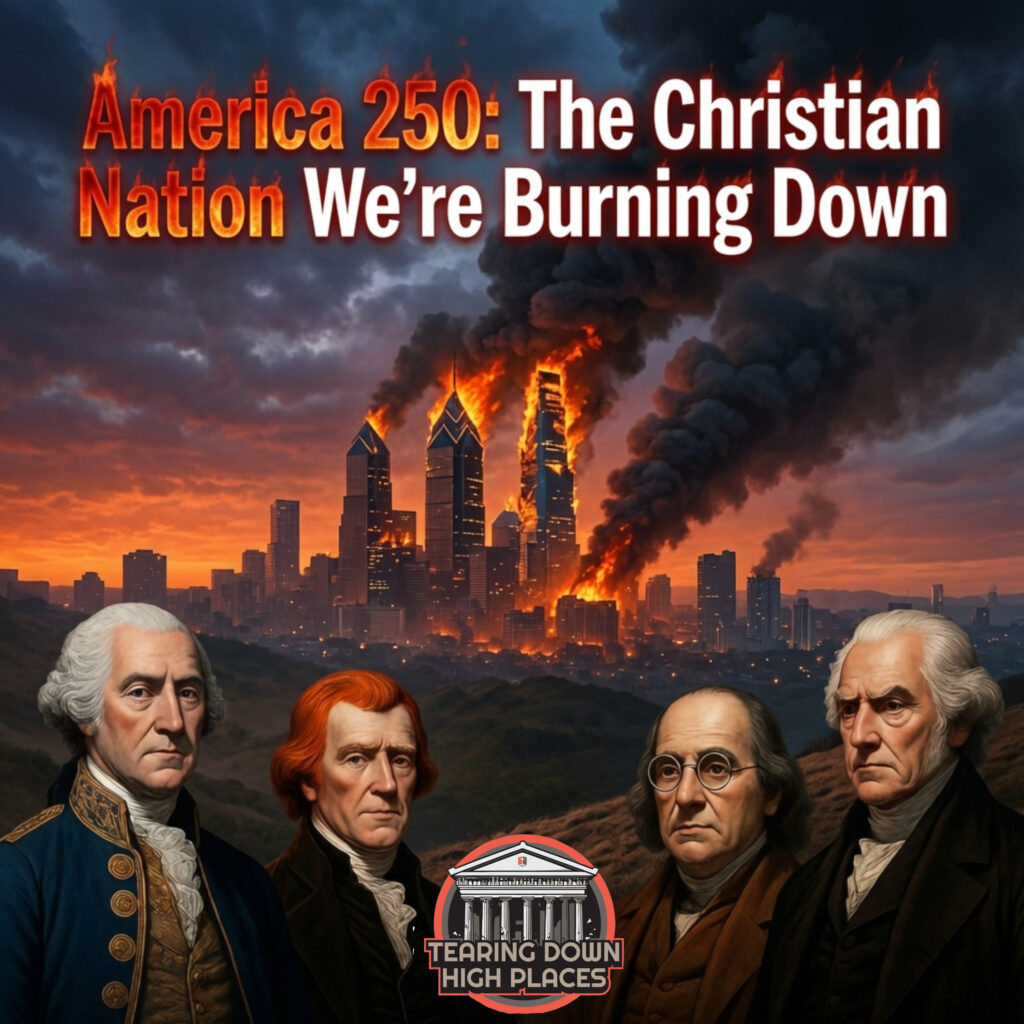
In this special Liberty Edition of *Tearing Down High Places*, special guest host Pastor Seth Brickley joins Pastor Tim Robinson, Pastor Jeff Kliewer and Average Joe Gormley to reflect on America’s 250th anniversary. They trace the nation’s Christian roots from Jamestown (1607) and Plymouth (1620) through the Declaration of Independence, the Great Awakening, and George Whitefield’s preaching. The conversation celebrates America’s blessings and prosperity while offering a candid critique of moral and spiritual decline, the importance of religious freedom, family, church influence, and strong biblical support for Israel. The episode calls the church to repent, lead the culture, and reclaim its role as the conscience of the nation.
Digestible / Skimmable Sections (17% Speed-Up Adjusted Timestamps)
– 00:00 – Intro & July 2nd Significance: Celebrating 250 years — why July 2nd (Lee Resolution) matters more than July 4th historically.
– 00:02 – Christian Foundations: Religious freedom drove early settlers; Jamestown & Plymouth roots.
– 00:07 – The Great Awakening & George Whitefield: How revival and bold preaching birthed the American spirit.
– 00:10 – America’s Rise & Blessings: From 13 colonies to global superpower; post-WWII prosperity.
– 00:12 – Signs of Decline: Moral shifts, removal of Bible from schools, family breakdown, and cultural disunity.
– 00:15 – Virginia vs. Plymouth Influence: Religious freedom models and founding fathers’ vision.
– 00:20 – What Would the Founders Think Today?: Disappointment in weakened church, broken families, and redefined freedoms.
– 00:26 – Church’s Role & Current Revival: Pastors rising, conferences like Virtue, baptisms, and fighting on two fronts.
– 00:30 – Support for Israel & Genesis 12:3: Biblical reasons America has been blessed and the danger of turning away.
– 00:35 – Closing Call: Repentance, cultural engagement, and hope for the next 250 years.